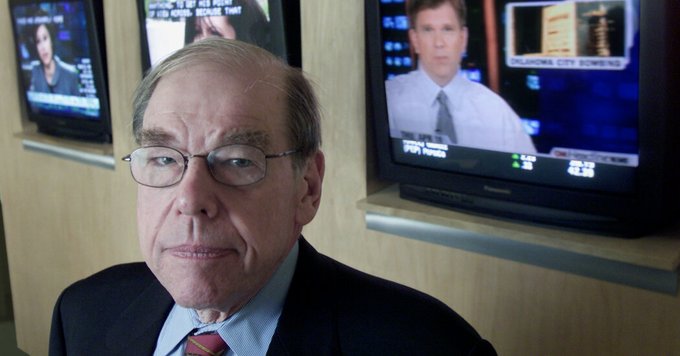
My dear friend Reese Schonfeld wrote this piece about the role of television entertainment in shaping culture almost 20 years ago. I think it’s aged remarkably well as a retrospective and gives us a first hand account of the instruments and mechanisms that influence and animate us.
Reese Schonfeld co-founded CNN with Ted Turner and then founded The Food Network.
For years and years and years, he and I, and our wives, met almost every week for brunch. Reese passed in 2020. His wife (Pat O’Gorman) and my wife continued weekly meeting for brunch, best friends. Pat passed in 2023. Pat was a wonderful and exceptional person.
Anyhoo, here is his contribution to the book Developing Cultures: Essays on Cultural Change
But first a photo of Reese and Pat!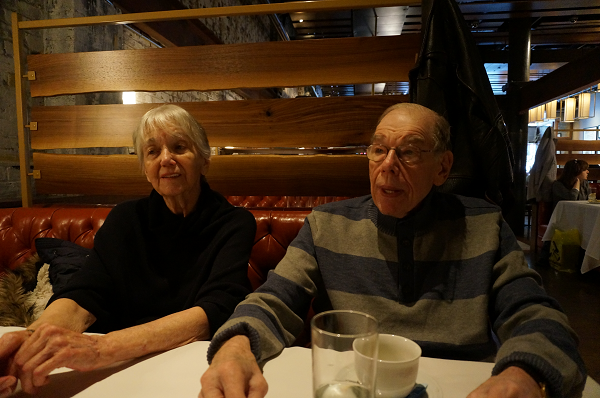
The Global Battle for Cultural Domination
by Reese Schonfeld, 2005
With the advent of the information age, we have reached a critical moment in human history: satellite communication and the Internet now permit a free flow of information that cannot be dammed.
Civilizations, nations, penetrate each other, delivering messages that can affect and may even infect targeted cultures. Just as democracies can subvert dictatorships, so can dictatorships subvert democracies. Theocracies can be converted to rationalism; secular societies can be transformed into theocracies.
Since it is virtually impossible to block international satellite distribution, an increasing number of groups have begun using satellite television networks as propaganda engines intended to impose their values upon other cultures. Hezbollah funds al-Manar out of Lebanon; the Chinese religious faction Falun Gong produces its New Tang Dynasty Television out of New York.
Propaganda may be delivered in news or documentaries, but it is far more powerful when delivered as entertainment.
During the twentieth century, much of the world relied on the West for entertainment programs, which naturally projected Western cultural values. Now emerging nations have begun to produce their own entertainment reflecting their own cultural values. The Hispanic version of soap operas, novelas, are now the world’s most widespread entertainment programming. Indian films are seen all over the world.
Entertainment Supremacy
The concept of “entertainment supremacy” is based in large part on the Pentagon concept of “information supremacy,” which was developed at the end of the first Gulf War.
By 1991, the United States, through CNN, had achieved worldwide informational domination. After that war ended, Iraqi generals told debriefers that they had received most of their information about the conflict from CNN. From that experience, the Pentagon developed its theory that informational supremacy would be as valuable as military superiority in winning future wars.
By the time Gulf War II rolled around, the battle for information supremacy looked very different. The Arab world had developed its own cable news network, al-Jazeera, the Islamic equivalent of Fox News—respectable but slanted.
Al-Jazeera covered the war just about as well as Western news networks and had the advantage of maintaining better sources in Iraq and the rest of the Arab world. Western networks were often forced to use al-Jazeera material. The new Iraqi government so resents al-Jazeera that it has shut down its Baghdad bureau indefinitely and expelled some of its journalists.
Net result: during the siege of Najaf, Western networks were forced to use news video from the Hezbollah’s more radical network, al-Manar.
Knight Rider
Satellited entertainment programs cross all boundaries, carrying their own cultural messages intentionally in their text or incidentally in their subtext. Bernd Schiphorst, the former head of Bertelsmann television, once remarked that Knight Rider, an innocuous American police/adventure series, helped bring down the Berlin Wall.
East German authorities had banned satellite reception, but East Germans demanded more varied, non-government-controlled television. They beat their trashcan covers into satellite dishes, built their own receivers, and spent hours watching Western entertainment brought to them by RTL, the newly launched Luxembourg satellite service. Most East Berliners paid little attention to RTL news or documentaries because they assumed all such programs were propaganda. They did, however, accept Western entertainment programs as accurate representations of life in the West.
On the surface, the programs appeared mindless and trivial, but they carried a subtext: the standard of living enjoyed by most Americans and other Westerners was considerably higher than that of East Germans.
Knight Rider starred David Hasselhoff as a detective who drove a supercar. Equipped with artificial intelligence, it conversed with Hasselhoff, helping solve cases. When the Berlin Wall came down, Hasselhoff was so popular that he sang at the formal ceremonies commemorating the great event. The car, however, lost its status. To the great disappointment of the East Germans, it was a fiction—even the United States did not have cars that talked.
The Cold War adversaries, East and West, communist and capitalist, shared many values.
Both were based on rationalism, seeking progress and material improvement in this life, not the afterworld. “Standard of living” was the criterion over which they battled. How did the East Germans come to know that Westerners lived better than they did? What made them resent their own standard of living? They learned of it innocently from Knight Rider and, according to Schiphorst, they resented it so much that it led to the overthrow of communism in East Germany—a prototypical example of the effect of entertainment supremacy.
Competition between capitalism and communism seems superficial when compared with the deep cultural divide between Western secular societies and fundamentalist Islam. Some fundamentalists reject all forms of entertainment. When the Taliban ruled Afghanistan, television, radio, videos, even audiocassettes, were banned, and movie theaters were closed. Other fundamentalists encourage entertainment but use it as a propaganda tool.
Al-Manar preaches Shiite fundamentalism on behalf of Iran. Saudi Arabia satellites transmit several Wahabi channels, which have become popular in Sunni regions. On one network, a Saudi sheik advises viewers that although the Koran instructs husbands to beat their wives when they disobey, it does not say how hard to beat them. He suggests that a slap with a silk handkerchief might be sufficient.
Fundamentalist Arab networks are rigidly doctrinaire, but secular Arab networks, which have far more viewers, model their entertainment programming on American television.
Reality TV
“Reality shows” are the battleground over which the culture war is raging. The New York Times’s Thomas Friedman takes great comfort in that trend: “Consider what was the most talked-about story in the Arab world in recent weeks. Iraq? No. Palestine? No. It was Super-Star, the Lebanese version of American Idol!” (September 3, 2003)

Naturally, the Fundamentalist Islamic Action Front condemns Super-Star, claiming the show facilitates substitution of the culture of globalization, led by America, for the cultural identity of the Arab people.
As content, Super-Star seems innocuous: a talent contest produced by Future TV, in which viewers help choose the winner. The contestants are male and female, women do not wear veils, and, perhaps most importantly, viewers are encouraged to vote.
In August, 4.5 million Middle-Easterners chose, as most talented, a Jordanian singer rather than a Syrian performer. The vote was 52 percent for the Jordanian, 48 percent for the Syrian. Rami Khouri, editor of the Beirut Daily Star told Friedman: “I do not recall in my happy adult life a national vote that resulted in a 52 to 48 percent victory.”
Does the success of Super-Star indicate a small shift toward democracy? Friedman hopes so; he sees satellite TV as a key to cultural change. But in what political direction? In the New Yorker, David Remnick quotes an American University of Cairo student:

Following the success of Super-Star on Future TV, the Lebanon Broadcast Company (LBC) launched Star Academy, a similar reality/talent show. The contestants live in a dormitory atmosphere: men and women do not share quarters, but the women are not veiled and occasionally fraternize with their male rivals. Winners are determined by judges, e-mails, phone calls, and the studio audience. They are rewarded Western-style, become instant celebrities, get a show biz gig and a chance to make big money. In a culture with little upward mobility, Star Academy offers the possibility of moving up in the world.
The success of Super-Star and Star Academy prompted MBC, a secular Gulf satellite network, to launch al-Rayes, a tamer version of the Dutch reality show Big Brother. Fundamentalists killed it after only two episodes because on its debut program, a young Saudi kissed a Tunisian girl on the cheek and, according to Gulf News, “all hell broke loose . . . the kiss was perceived as a sign of moral depravity” among Muslims of every stripe.
MBC TV bowed to the general uproar, canned the show, and apologized. Gulf News concluded that “A kiss on al-Rayes is so over the top that even moderate Arabs are appalled. It further indicates that the cultural evolutionary process requires time and tact, irrespective of conservative or liberal preferences” (Gulf News, May 2004).
Despite such setbacks, satellite television may be the only way to introduce Western cultural values to the Arab street. In a world of mullahs and imams, it is too dangerous to present foreign ideologies at ground level. The success of Super-Star and Star Academy demonstrates that young Arabs share a desire for democracy, fame, and fortune, desires that Islamic fundamentalists seem eager to suppress.
The Lebanese Broadcasting Company, the most successful network in the Middle East, is owned and programmed by Lebanese Christians who learned their television in the United States. It schedules American sitcoms and adventure shows, Mexican novelas, and BBC historical dramas. The West Wing provides an up-close look at democratic politics. The plot is full of conflict, but its subtext is that dissent and disagreement are tolerated in Western societies and that democracy works the better for it. What could pose a greater threat to the feudal, theocratic culture of the Middle East?
There is nothing subtextual about al-Manar, the fundamentalist Muslim network funded by Hezbollah and up-linked from Lebanon that features news, documentaries, historical dramas, kids’ shows, and religious programs. It produces two different program schedules: a Shiite broadcast signal for consumption in Lebanon and Iran, and a pan-Islamic satellite network seen throughout the world. Both networks schedule news programs and documentaries that portray Americans in Iraq as murderers and terrorists. They claim that American soldiers violate Iraqi mosques and Iraqi women. The Israelis, too, are portrayed as murderers and terrorists, while Muslim suicide bombers are recruited openly and glorified as martyrs.
Al-Manar’s most successful program, al-Shattat, is a Syrian dramatic series that pretends to present a full, “historical” view of Zionism including the classic anti-Semitic myth, The Protocols of the Elders of Zion. The Protocols, a Czarist forgery, accused Jews of killing babies and baking their blood into matzos as part of the Passover ritual. Al-Manar aired it in prime time during Ramadan 2003, when TV viewing is highest throughout the Muslim world. In al-Shattat, Jews are depicted as monsters; Muslims are victims who ultimately destroy their evil tormentors. Al-Manar shows Jews in skullcaps and prayer shawls plotting Passover murders. They seize an Arab, who may know of their plot, bring him in bound to a stretcher, slice off his ear, pour molten lead down his throat, and dispose of his body. They then drain the blood of an Arab child and bake it into matzos, which they distribute throughout the ghetto. All shown in full color.
After al-Shattat was aired, Israel lodged a protest with France, as a member of the Inter-Government Organization that regulates Eutelsat, the satellite which carries al-Manar. The Israelis reminded the French of the long and violent anti-Semitic history of Protocols. In response the French parliament passed a law authorizing French media regulators to drop any satellite channel that disseminated “antiSemitic” messages. A year later al-Manar was banned there and in the United States, though it is still available on Eutelsat outside of France and on other American-owned or French-controlled satellites (except those serving the United States).
Israelis tolerated al-Manar’s messages of hate for four years. They had been delivered only through news and documentary programs. It was al-Shattat, propaganda masquerading as entertainment, that forced Israel to act. TV news is like a newspaper; consumed one day, fish-wrap the next.
Entertainment may become mythology, and myths are incontrovertible.
The Protocols of Zion still resonate in Eastern Europe and are now taking root in the Arab world. Al-Shattat was Hezbollah’s follow-up to the Egyptian program, A Knight Without a Horse, a much less graphic version of the Protocols aired during Ramadan 2002. Within fundamentalist Islam, there is a keen propaganda war for the hearts and minds of the Muslim world. Will Iran’s Hezbollah or Egyptian satellite television win that battle?
China:
The Far East is in the midst of its own entertainment war: state-controlled Chinese broadcast (CCTV) and cable programming networks vs. New Tang Dynasty Television (NTDTV), a satellite service associated with the Falun Gong cult.
China is officially areligious, while the Falun Gong preaches a unique mixture of Buddhism and Taoism. According to David Rennie in the London Telegraph, its founder, Li Hong Zhi, “claims to have been sent to earth by a supreme being, who commissioned him to save humanity from its corrupted morals and the technological evils of science” (April 26, 1999).
Speaking to Michael Forney of Time Magazine, Li offered his opinion that “humankind is degenerating and demons are everywhere”—as are extraterrestrials—and that Africa boasts a 2-billion-year-old nuclear reactor. “He also says he can fly” (July 2, 2001). Right now, he is flying his message into China via his own satellite network, NTDTV.
At first, in 2003, the network’s signal was encrypted, which meant that most Chinese could not watch it. A year later, it arranged for unencrypted carriage on Eutelsat, the same satellite company that delivers al-Manar. The People’s Republic of China (PRC) objected strenuously to the broadcast of a philosophy so antithetical to its own. Eutelsat ignored the PRC’s protests and its threats to pull its commercial traffic from Eutelsat satellites everywhere. France’s lack of response to the Chinese—not unlike its ignoring Israeli protests over al-Manar’s airing of al-Shattat—proves that sovereign nations cannot protect themselves from inimical ideologies delivered through entertainment or factual programming originating outside their borders.
NTDTV executives deny affiliation with the Falun Gong, but the ones I talked to are members of the sect and affirm their spiritual connection to Buddhism and Taoism. The Falun Gong identifies the original Tang dynasty as “the most glorious era in Chinese history . . . with the rise of Buddhism, the people lived with deep respect for virtue and divine guidance” (New Tang Dynasty promotional material). Thus, the ideological clash of the Chinese government and Falun Gong is a battle for entertainment supremacy between a nation that denies
there is a God and a man who proclaims he is God.
The Falun Gong is the most formidable opponent that the PRC has ever faced.
In April 1999, ten thousand Falun Gong members suddenly turned up in front of the Chinese Leadership Compound in Beijing, squatted down, and demanded official recognition as a “sect,” which would give the group official standing. The government refused.
Following the refusal, five people identified by the Chinese Government as Falun Gong burned themselves to death in Tiananmen Square to protest the refusal.
Then in June 2002 the Falun Gong engineered a communications triumph. It hijacked the state-controlled CCTV network’s broadcast of the World Soccer Cup finals and replaced several hours of programming with Falun Gong spiritual messages.
NTDTV executives deny that the network has a political, social, or religious agenda. Nevertheless, its programming reflects the views of its founder. The morning children’s cartoons contain no violence. The six daily news programs and the financial reports carry items that would not appear on CCTV, and other items are slanted in accordance with Falun Gong doctrine. NTDTV programs, like Meet the Press, or explorations of science, technology, and “social issues,” its documentaries, and its costume dramas based on Buddhist history all reflect the founder’s antiscientific and antimodernist views.
NTDTV Primetime features Hollywood movies from the 1930s through the 1950s. They are affordable but, more important, they conform to NTDTV’s avowed intention to promote democratic cultural change so that “more people can enjoy peace and freedom and live harmoniously among different races and beliefs” (New Tang Dynasty promotional material).
Hollywood films of the 1930s and 1940s promote a similar credo. They applaud democracy and treat religion with reverence; when good fights against evil it always prevails. The message could not be more simple: black and white, no grays, a trip back to what Li Hon Zhi sees as a glorious past.
Will the burgeoning NTDTV audience react as East Berliners did with Knight Rider? Will it take a leap from communism to capitalism, from atheism to faith? Not likely.
State-controlled CCTV combats NTDTV with a wide variety of television and cable networks, among them entertainment channels, twenty-four-hour news, sports, and financial channels, and a children’s network. Provincial and municipal governments operate local broadcast stations and control cable systems that already reach more than 100 million homes; the cable fee is only slightly more than a dollar per month.
Cable systems in populous metropolitan areas are adding capacity, and most now feed as many as sixty channels, among them Chinese versions of CNN, MTV, ESPN, Lifetime, and CNBC. There are art/culture channels and movie channels featuring recently released American features. Most Chinese seem to share the U.S. taste in films, and Chinese government movie standards are similar to those in the United States: violent action is virtually unedited, while sexually explicit scenes are censored.
Given the impressive range of subjects and networks offered to the public under government auspices, NTDTV faces stiff competition for viewer attention. But thanks to Eutelsat and despite PRC objections, it has managed to sneak in and stay on. The PRC reflects the values of a secular and progressive nation. The Falun Gong is a conservative spiritual sect, and the PRC sees it as a subversive cult. Its growing popularity amazes and alarms the Chinese government.
Christian Broadcasting
In the early 1970s, the Reverend Pat Robertson launched his Christian conservative program on television stations throughout the United States, and it has helped bring together disparate groups into a massive movement with serious influence on American political life. The PRC fears that the NTDTV broadcasts may have a similar impact on China. Interestingly, American conservatives and Christian fundamentalists now support the Falun Gong; see William Safire’s New York Times column, “Go, Falun Gong!” (August 30, 2004).
Adding further variety to its programming, CCTV has given American programmers access to some of its prime time hours. Encore International, a subsidiary of the U.S. company Liberty Media, provides and sells the advertising for feature films and novels on CCTV. The films must be approved by CCTV personnel, who are government officials, and taboos include anything controversial like the Nationalist government, Chiang Kai Shek, or Sun Yat Sen. The Taiwanese flag is never shown. But as China shifts from an agrarian to an industrial society, the PRC is gradually introducing issues of social progress via entertainment television.
Population Communications International
(PCI) is a nonprofit U.S. group affiliated with the United Nations, works with broadcasters in emerging nations to produce culturally relevant radio and TV dramas, particularly soap operas.
Since 1999, PCI and CCTV’s Channel 8 have developed a primetime serial, Bai Xiang (Ordinary People), set in rural China, about a strong woman named Luye who defies her husband and gives birth to a little girl. This is a brave decision, given China’s “one child” policy (the government provides a stipend, free education, and free medical care, but only for one child). After her daughter is born, Luye divorces her husband, remarries, and then divorces her second husband when he too demands that she bear him a son. Eventually Luye launches a successful business, and she and her daughter gain the respect of their fellow villagers.
In its second year, Ordinary People introduced another issue: sexually transmitted diseases.
Luye’s first husband contracts AIDS through a bungled blood transfusion. (Over 1 million Chinese are now HIV positive and China has admitted to past inadequate blood screening procedures) Next year’s episodes will introduce environmental issues, notably industrial pollution. Luye and her daughter must deal with village authorities about pollution, politics, and profits as a rural society moves into the twenty-first century. Ordinary People has the highest ratings on CCTV in its time slot.
CCTV and the other state-owned networks are advertiser-supported and attempt to attract the largest possible audience. NTDTV, on the other hand, is message-driven, deriving its support from ideological backers, just as Pat Robinson did. If NTDTV ever gains entertainment supremacy and converts a mass audience to its beliefs, the face of the PRC will be far different from today. The long-term future of China may hinge on a satellite battle in the sky.
On March 15, 2005, the Associated Press reported that Eutelsat was terminating its contract with NTDTV on “commercial grounds”. ‘Eutelsat is not reacting to pressure from the Chinese authorities or any other authority,’ the company said in a statement.”

The next day the International Federation of Journalists (IJF) claimed, according to the Wall Street Journal, that “the inexplicable decision to end the contract . . . appears to be a shocking act of censorship.” The IFJ suggested that “Beijing has warned [Eutelsat] that business opportunities linked to broadcasting 2008 Olympics might be at risk.” NTDTV has taken the matter to court, but as of now NTDTV is no longer available in China.
Novelas
Soap operas and their Latin American cousins, novelas, were once thought of as light entertainment, of little cultural significance.
At first, soaps dominated the foreign market; now novelas are much more popular. Why? Because soaps reflect American cultural attitudes while novelas are far more relevant to life in the developing world.
Western cultures offer women opportunities that other societies do not. Soap opera heroines are independent achievers with a wide variety of romantic and economic choices. Novel characters dream of improving their standard of living by marrying up or by forging a career based on primitive skills: sewing, cooking, opening a small shop. This lack of social mobility helps explain the success of novelas: American audiences think they can achieve the same success as soap opera heroines; third-world women know they don’t have a chance.
Soaps and novelas both air daily, but novelas are seen in prime time, not in the afternoon. Novelas run for twenty to thirty weeks and have a beginning, middle, and an end, while soaps roll on forever. Family groups gather to watch novelas, which are constructed as family sagas with three generations of characters. HBO’s The Sopranos resembles a novel.
Cultural Nudge Networks
Since the mid-1980s, three nonprofit organizations have recognized the propaganda potential of serial dramas and are working with broadcasters to modify cultural behavior through them.
- The Johns Hopkins Center for Communication Programs (CCP)
- Population Communications International (PCI)
- BBC World Service Trust help create programs that promote democracy, women’s rights, access to healthcare, and economic and environmental progress.
CCP’s credo is “educating through entertainment with an emphasis on serial drama.”
Since its founding in 1982, CCP has established guidelines:
- The problems addressed must be highly dramatized;
- indigenous cultural values must be taken into account;
- storylines must be personally relevant to the viewer;
- and production quality must be equal to that of commercial programs.
CCP programs are more direct than PCI or BBC productions.
In its Bangladeshi series involving AIDS, a doctor tells his staff: “We must hate the disease, not the patient . . . people do not get infected by touching.” Then he grasps the patient by the arm and the victim cries out, “At last someone has touched me. Now, I realize that I am not an animal.” Because CCP receives government funds, it must make the government’s message loud and clear.
PCI, funded by private foundations, deals for the most part with issues of gender, population control, and sexually transmitted diseases. It reaches out to some of the world’s largest nations (e.g., China, with Ordinary People) and to some of the smallest, such as the tiny Caribbean island of St. Lucia. When a population explosion threatened St. Lucia, PCI stepped in. Radio is St. Lucia’s only mass medium, so PCI and a local station created a fifteen-minute radio series full of love, romance, and safe sex. St. Lucia is predominantly Roman Catholic, and public discussion of birth control is taboo. Therefore, condoms were referred to as “catapults.”
Phrases from the series—“Do you have a catapult?” “Is your catapult on?”—became part of everyday life.
Sales of condoms rose, population growth cooled, and an entrepreneur launched a new line of condoms called Catapults (now the number one brand on the island).
The BBC, which has a noble tradition of helping emerging countries, has established the privately funded BBC World Service Trust. Its brief calls for “reducing poverty” and “empowering citizens at grass-roots levels”—through entertainment. A BBC/Nigerian project, for example, dramatizes both democratic participation and the empowerment of women in a single radio series. Voices features a character named Mama Major, a load carrier in the central market. The market’s streets are strewn with garbage and pitted with potholes, making it impossible for load carriers to navigate their routes.
At first, the local council refuses to help, but Mama Major reminds the council chairman that he is up for reelection and threatens to organize all the load carriers against him. He gets her point and cleans up the market.
Like CCP and PCI, the BBC World Trust addresses AIDS and birth control. BBC joined with the Doordashan National Network and India’s National AIDS Control Organisation to produce a mystery series starring an HIV-positive detective, Vijay. The program is described as “an entertaining popular drama which also encourages people to change their sexual behavior.”
Targeted at a rural population, it has been the seventh highest-rated program in India, reaching more than 150 million people. Vijay solves cases involving quack doctors, superstition, rape, domestic violence, and dowries, among other matters. (Detective Vijay has AIDS, but as in Ordinary People, it was acquired through a bad blood transfusion. Sexual transmission is not for heroes.)
Ugly Betty
Novelas are produced for a mass audience, much of which has yet to join the middle class, and are aired on hundreds of television stations and networks throughout the Far East, Eastern Europe, and Africa. In the Middle East, they are featured on satellite networks like the Lebanese Broadcasting Company, which changes its novel schedule during Ramadan, when TV audiences change their viewing habits.
Encore, the US satellite network, has added dubbed Mexican and Peruvian novelas to its Chinese TV schedule. Ugly Betty, a classic Hollywood ugly-duckling tale, captivated the Chinese audience: “Take off your glasses, let down your hair and suddenly you’re beautiful.”
Ugly Betty does not become beautiful, but her looks are considerably improved: she gets her man and succeeds in business.
Ugly Betty was so popular that Televisa, the Mexican novela factory, produced a follow-up series with Betty as boss of her company, structured more like a Western soap. That series was canceled after twenty episodes due to poor ratings. It would appear that telenovela viewers are more interested in a woman’s struggle to get to the top than in female characters who are already there.
Simplemente Maria
Encore followed Ugly Betty with Simplemente Maria, the story of a Peruvian girl who falls in love with her employer’s son, gets pregnant, and is fired. She then learns how to sew, saves money, buys a sewing machine, and eventually becomes a Paris fashion designer.
When Simplemente Maria aired in Latin America, sales of Singer sewing machines went through the roof. Ditto in China when Encore ran the program there.
There are four Spanish-language networks in the United States, all featuring novelas. Univision, the dominant network, carries Televisa’s Mi Gorda Bella. It runs at 6 PM and is watched by 6 percent of all Hispanic households. The heroine is overweight and ridiculed for it. In the first act she cries a lot but slims down; in the second, she gets revenge on her tormentors; in the third, she marries the man she always wanted.
Univision boasts that its novelas are “mas sentimiento” while as soaps are not sentimental.
Novelas are the Harlequin novels of the second and third world. Plus, they offer the world’s largest Victoria’s Secret market: plenty of pictures of lingeried ladies cavorting with Latino hunks. As for racial attitudes, since black is not beautiful in Latin America, novel heroines are always light skinned and mostly blonde and/or blue eyed. Male leads, usually played by Argentineans, can pass for Spaniards, Italians, or Frenchmen. In Latin America upward mobility means marrying richer and whiter.
Globo
The Brazilian novela factory Globo, is somewhat more progressive. It recently introduced a novela featuring a highly successful black family. But since Brazilians are not yet ready to accept the idea of white servants in a black household, the family retainers are also played by blacks. Globo does pay attention to other social issues, including drug use and AIDS (the latter, again, only from nonsexual transmission). Male homosexuality is taboo, but Globo frequently uses lesbian plot lines—two negligees are better than one.
Televisa novelas are paying increasing attention to their teenage audience. Safe sex and HIV are part of their plot lines, and condoms are openly advocated. In the midst of a population explosion throughout Latin America, Televisa, a responsible broadcaster, believes that the discussion of contraception cannot be avoided. There is no mention of male homosexuality, although Televisa occasionally uses stereotypical gays—hairdressers or fashion designers—as comic characters.
American Soap Operas
In the United States, Proctor & Gamble pioneered radio soap operas in the 1930s (P & G manufactured soap, hence the name “soap operas”). Their plots were just as sentimental as novelas, and American housewives responded just as enthusiastically as Latin Americans do now. But it all changed in the mid-1970s, when American audiences grew worldlier and the sentimental was replaced by the sensational. Soaps took on a harder edge.
Three significant events—two sociological, one technical—changed soaps forever.
- First, in the 1950s, America became far and away the world’s richest country. As the country became solidly middle class, poor people almost disappeared from soap operas.
- Second, American housewives began pursuing careers, so the soap opera audience was no longer home.
- Third, Nielsen installed TV People Meters, which measure the sex, age, education, and income of television viewers. Advertisers now buy commercial time based on who is watching, not on how many. In particular, advertisers went after high school and college girls. As the networks programmed the soaps for younger viewers, family sagas and morality went out and thrills came in.
American soaps today are sensational, populated by vampires, voodoo, reincarnations, psychics, and miracles. Rich people seduce and back-stab their way to even greater fortunes. Pleasure is everything, sex is routine, and drug use rampant. Evil triumphs as often as not, crimes go unpunished, and there is no moral compass—all in an attempt to attract the largest, youngest audience. So far, it is working. The University of Texas rescheduled its most popular classes to the morning to avoid conflicts with afternoon soap operas.
On General Hospital, in 1981, the leading character, Laura, married Luke, a man with whom she had fallen in love although he had once raped her. It was the highest rated episode in the history of soap operas. Villains became stars.
As for heroines, sweetness was out, bitchiness was in. Cynicism and sophistication dominated soap operas; novelas remained true to their shop girl audience. Innocence flourished abroad, but vanished at home.
Soaps have attempted to confront some social issues. As far back as 1987, NBC launched Generations, a soap opera with a successful black family at its core. The show lasted three years. Several soaps now include black families in subplots, and black characters are a permanent fixture in the soap opera landscape.
Soaps are conflicted about gender issues; as in Brazil, lesbians may be important characters, but gay men are not. Erica Kane, the central character in the long-running ABC soap All My Children, has a gay daughter, Bianca, who is raped and bears a daughter. The baby is kidnapped, thereby avoiding political controversy surrounding gays’ fitness as parents. In December 2004 Bianca got her baby back, but within three months Bianca was written out of the show. The president of ABC Daytime told the New York Times: “For some people, minorities—of color, of sexuality—are road blocks to full viewer commitment.”
Since viewer commitment is a requirement for soap operas, Bianca finds a new job in Paris; but like the kidnapped baby, she can always be brought back if the audience misses her. Other American soaps deal peripherally with gay characters, but none has ever achieved the status of “tent pole”—that is, characters upon whom story lines are built. After the Nobel Prize winner Colombian novelist Gabriel García Márquez wrote and produced several movies that failed, he went on television to proclaim that Latino writers who wanted to reach and affect a mass audience should turn to scripting novelas.
CCP, PCI, and the BBC Trust explicitly exploit the power of serial dramas in an attempt to change cultures, but entertainment programming created for purely commercial reasons is far more effective. There’s no doubt about it, entertainment programming changes minds. There has never been a more effective propaganda vehicle than a 24/7 satellite channel—but only if people watch it.
Twentieth-century America was shaped by entertainment. An agricultural nation suffused with Victorian morality was transformed into an industrial nation with a relativistic, almost-anything-goes attitude. Millions of immigrants learned English in movie theaters and from television sets. Movie subtexts included lessons in cultural behavior and, most importantly, inculcated American values in their audiences. Now, in the early twenty-first century, the counterculture has raised its head, and religious television and movies and gospel music are trying to reverse the trend.
The Federal Communications Commission (FCC) in the United States and public broadcasters in Western Europe generally reinforced democratic values and, particularly in entertainment shows, portrayed a traditional middle-class lifestyle that supported conventional social norms. An American growing up in the forties and fifties worried that his own family was the only one in the country that wasn’t as perfect as Father Knows Best. Middle-brow television confirmed traditional attitudes and influenced viewers to conform to them.
It was not until the late sixties that entertainment television began to transform racial attitudes, with programs like Julia, The Jeffersons, and The Cosby Show.
Those three programs showed blacks making their way up in America. Julia was a nurse, a single mother battling to keep her family together. George Jefferson was a successful middle-class entrepreneur with attitude. Bill Cosby played a highly successful professional, surrounded by a strong and loving family, respected and loved by all who knew him.
At the same time, Gordon Parks, Jr. created Superfly, a movie that glorified drug dealers and gangster life. There are no Cosby clones on television now, while the Superfly culture lives on through hip-hop.
The battle between middle-class values and hip-hop is as obvious a struggle for entertainment supremacy as one is likely ever to see. It will be decided by which programs get on television, which movies are made, and what music gets on the air.
Epilogue
All television is educational, and we must choose our textbooks very carefully.